
Savvy Sage Summary
DISCLAIMER: Normally, I make these Savvy Sage Summaries available exclusively to Savvy Insiders (ad-free) on Patreon for $3/month, but I’m making this one an exception to give you an idea of what these summaries look like! Consider supporting my work on Patreon today: patreon.com/SavvySage
NOTE: The following is an edited transcript of the original video—no generative AI tools were used.
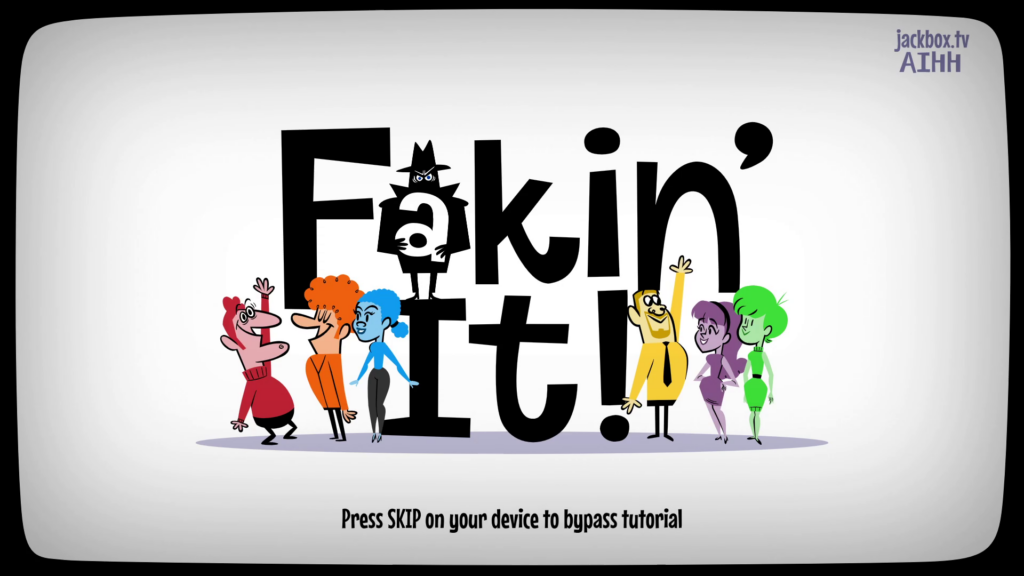
Fakin’ It is a social deduction party game from Jackbox Games, and one of five games included in The Jackbox Party Pack 3, often considered to be the pack that put Jackbox on the map.
Fakin’ It had been in development for many years, going all the way back to the very first Party Pack. It was eventually green-lit for The Jackbox Party Pack 3, and was officially unveiled in September of 2016, before being released alongside Party Pack 3 a month later, on October 18th, 2016, on all major platforms.
While it isn’t as popular as You Don’t Know Jack, Quiplash, or Trivia Murder Party, Fakin’ It (with its simple gameplay and 1960s art style) did get a cult following, resulting in some merchandise like a T-shirt, a notebook, and a board game adaptation.
Fakin’ It is notable for being the first Jackbox game whose art and animation were done by Owen Watson. Before Jackbox, he designed the art for the indie party game Thief Town, a wild west-themed local multiplayer game. Owen Watson would go on to become a lead artist for Jackbox Games, working on titles such as Monster Seeking Monster, Split the Room, Joke Boat, and The Devils and the Details.
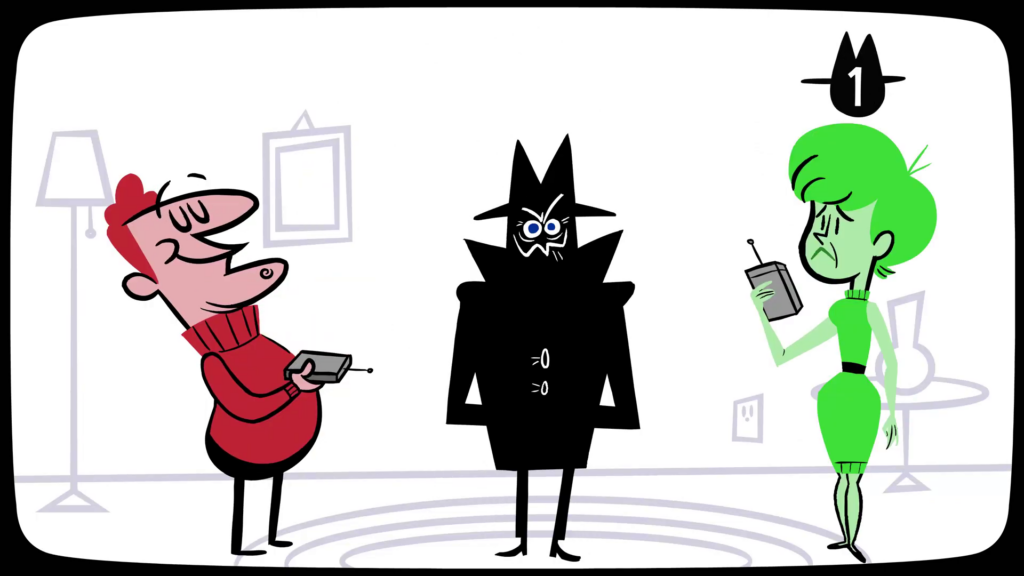
The main gameplay premise involves finding the outlier—each player is given a task to do, except for one random player, who is considered the “Faker”, and has to “fake” it without anybody else finding out.
In each round, each player will be given a task on their device, except for one random player, who will get nothing but a “Try to blend in” message—that person is the Faker, but the rest don’t know that.
Players have about 15 seconds to read the task and come up with their responses, while the Faker has to try to blend in. Afterwards, the players give their responses right when the screen says “GO!”
Following that, all the players (or sleuths) must vote on who they think is the Faker, but it has to be unanimous. If they all pick the correct person, the Faker is caught, and the sleuths get the points. The Faker however can try to deceive people into picking the wrong person, and there are only 3 chances to catch him (2 if it’s a 3 player game) before he evades capture, resulting in the Faker getting the points.
In each round, a player can choose one of four categories:
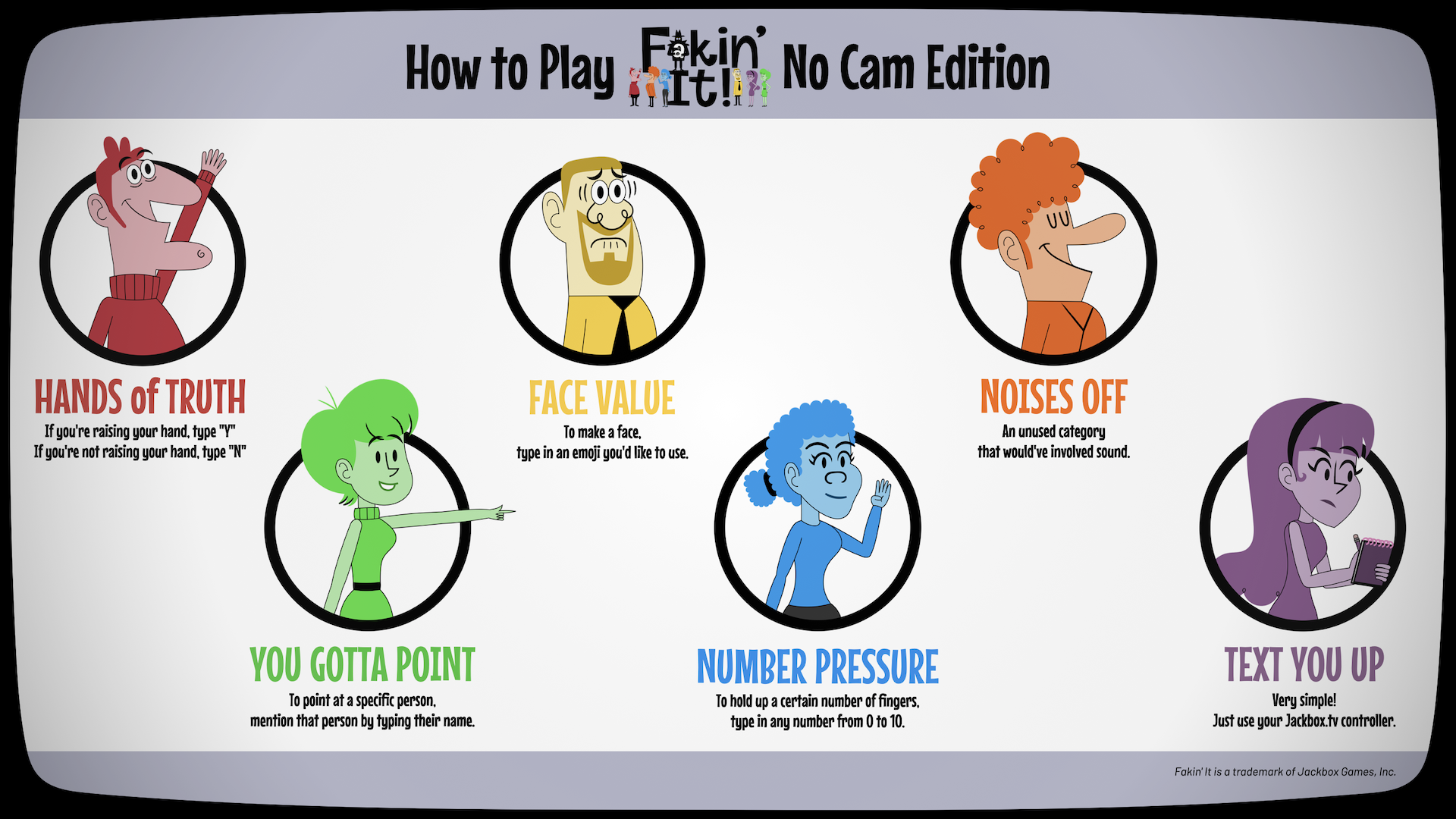
- Hands of Truth: Involves raising your hand.
- You Gotta Point: Involves pointing at another person.
- Face Value: Involves making a potentially weird face.
- Number Pressure: Involves holding a number of fingers from 0 to 10.
Of course, we can’t talk about Fakin’ It without addressing the elephant in the room: The Orange Guy. At first glance, he may just look like a stand-in to complete the gang, but taking a look inside the game’s files shows that he was going to be in the game at some point in development as part of an unused category called Noises Off, which would’ve involved making sounds, but was scrapped due to “not being able to process them all at once”.
Despite this, he would eventually gain a following among Jackbox fans, and would later appear as a cameo in future Jackbox party games.
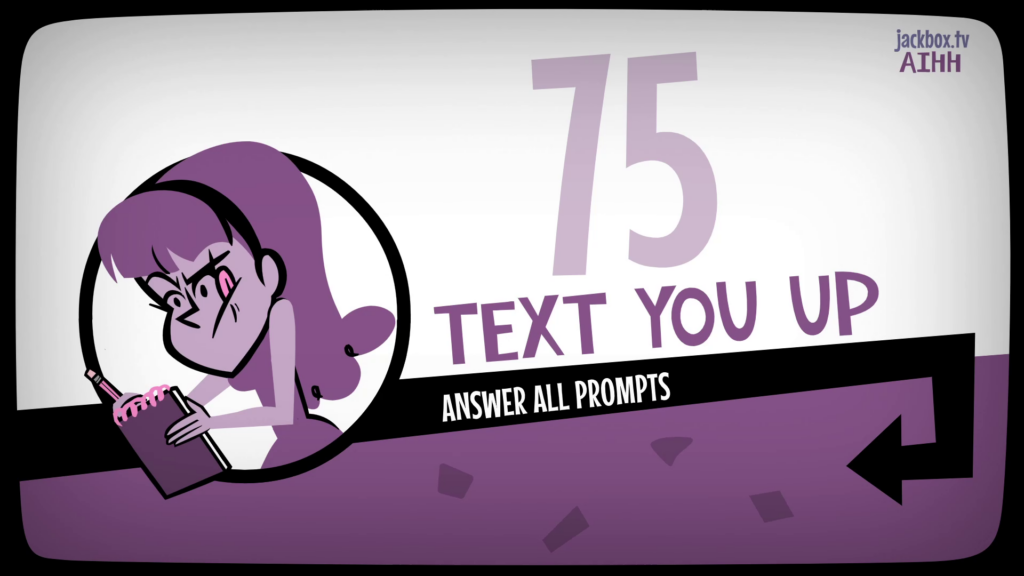
After a few rounds or so, we come to the final round of the game: Text You Up. This involves answering three prompts on your device (2 if it’s a 3 player game), and the Faker also gets to participate, albeit with slightly different prompts.
After all is said and done, the player with the most points, wins the game—there’s also honorable mentions for Best Faker and Best Sleuth.
And that is how Fakin’ It is played—to sum up, it’s a very fun game and I would highly recommend people go check it out.
There’s only one problem though: The game is not streamer-friendly.
Fakin’ It is one of the few Jackbox party games where it was designed for local multiplayer in mind. In other words, you have to have people around you to actually play it. The tutorial also makes it clear that “it’s important to be able to see each other”, and as a result, makes the game kind of impossible to play with online friends, especially in today’s livestreaming environment…or so we thought.
Because as it turns out, some people (including yours truly) have found a way to get around this, and this is where we get to the No Cam Edition.
Fakin’ It No Cam Edition is a fan-made experimental method for playing the original Fakin’ It, where instead of having to see other players do the tasks, the players send in their responses through a private group chat.
The rules work pretty much the same as in the main game, albeit with a few changes here and there: For one, each player would have to prep their response ahead of time, and have to submit their response right when the “GO!” screen hits. You don’t want to be too early or too late; you wanna be just at the right time.
The categories are also done a bit differently in No Cam Edition:

Hands of Truth
Raising your hand is equivalent to answering "Yes", while not raising your hand is the equivalent to answering the opposite. Thus, you would respond by typing in either "Yes" or "No", or "Y" or "N", whichever is easier.

You Gotta Point
Pointing at a person is equivalent to mentioning (or @'ing) a person on social media. Thus, you can respond by mentioning (or @'ing) another player, simply by typing their name.

Face Value
Making a face is kind of similar to using an emoji—you can use any one you want, as long as it has a face on it. (You'll have to act fast however.)

Number Pressure
Holding a number of fingers is equivalent to typing in a number from 0 to 10—the number of fingers a normal person has. Respond using only those numbers—unless you want to be picked the Faker.

Text You Up
Just focus on your device, and...that's it. This is the most simple out of the other categories.

A few quick notes about the No Cam Edition:
- This is NOT intended to be the recommended way to play Fakin’ It normally. The local way will be always the best way.
- It is highly recommended that you still use some form of voice communication if you are going to do the No Cam Edition. While it is technically possible to “discuss among your friends” in text form, it’s rather time-consuming—if you’re willing to go that route though, do it at your own risk.
- These instructions apply to any chat program that allows for private text and voice group conversations, such as Discord and Whatsapp. I would not recommend using the No Cam Edition method in live chatrooms, unless you’re desperate to play.
And that’s really about it! If you manage to follow all of the instructions very carefully, you can start playing Fakin’ It with your friends online!
That is until the sequel for adults comes out, of course. (I’m still waiting for a family-friendly sequel, dang it!)
For now though, thanks very much for reading—as a reward, here’s a free Faker for you all!